
FREEZELINK BLOG
AGRIC & PHARMACEUTICAL COLD CHAIN INSTITUTE
Ghana’s Leaky Bucket: Plugging the Billions Lost to Food Waste
Introduction
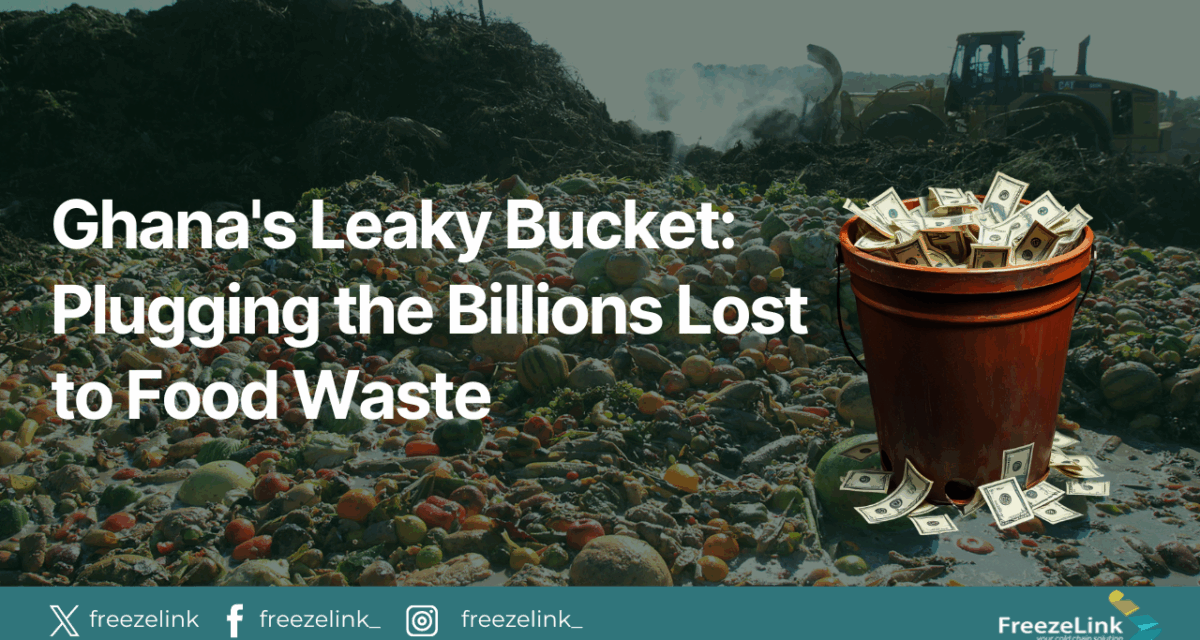
The dialogue at the recent 2025 Ghana Horticulture Expo crystallised a fundamental choice for the nation’s economic planners. To increase the availability of its most perishable foods and expand its export horizons, should Ghana channel its resources into growing more, or into losing less of what it already grows? Consider the simple analogy of a leaky bucket. What is the most logical first step to filling it: find more water to pour in or to first mend the holes? For Ghana, where an astounding 45% of the fruit and vegetable harvest perishes annually due to a broken cold chain, this is not just an analogy—it is a multi-billion-dollar imperative.
Reality Check: Production Without Preservation
This urgent need for a paradigm shift was powerfully articulated at the Expo, organised by the Federation of Associations of Ghanaian Exporters (FAGE). As officials discussed ambitious agricultural production targets, Farmer Anthony Morrison, Chief Executive at Chamber of Agribusiness Ghana, delivered a crucial reality check. “Let’s not put the cart before the horse,” he implored the audience, following an address by President John Dramani Mahama. “We need to pay attention to…post-harvest losses. We lose billions of dollars every year.” His point is clear: a relentless focus on production is futile when the systems to preserve that production are fundamentally failing.
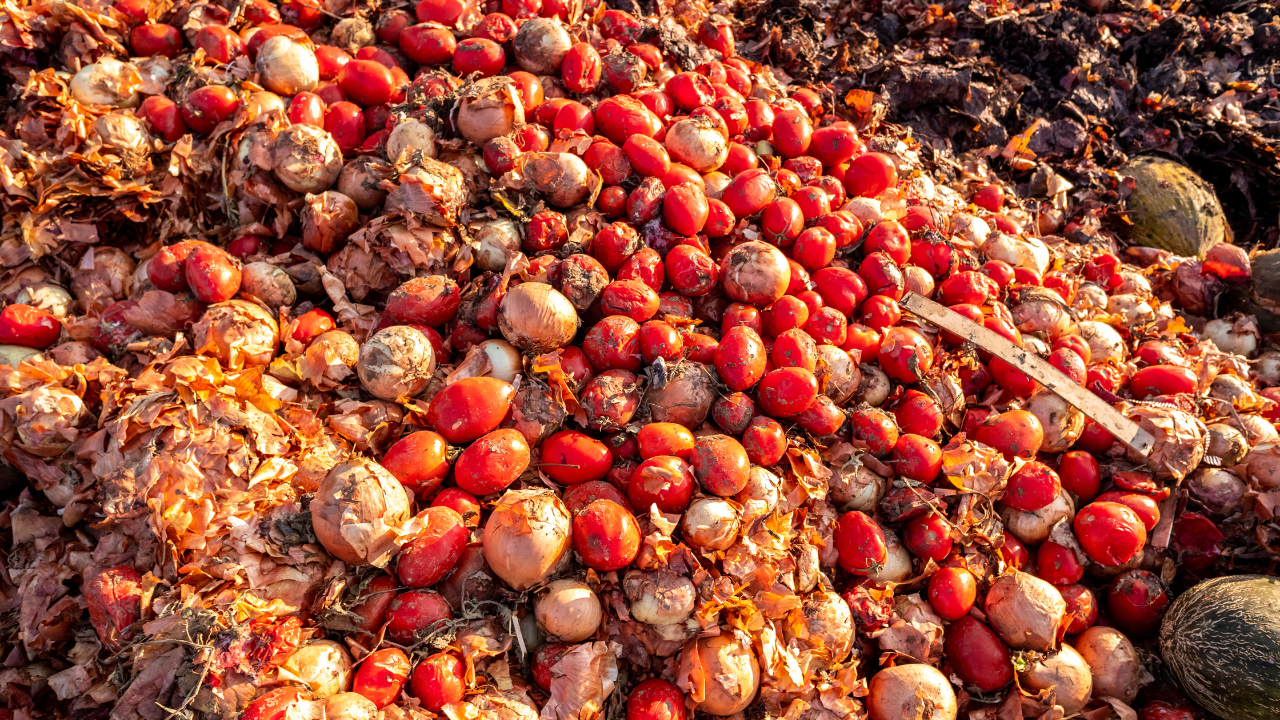
The economic self-harm is profound even beyond highly perishable horticulture. While up to 60% of farmed fish is lost to insufficient cold storage, the country simultaneously imports vast quantities of the very commodities it wastes. A feasibility study for the Danish Embassy highlighted that Ghana imports over $100 million in tomato paste and up to $280 million in fresh tomatoes annually, much of it from neighbouring Burkina Faso3. This paradox highlights a massive, yet solvable, inefficiency. The solution is not complex, but it requires a redirection of capital toward logistics. According to the Boston Consulting Group, investing in post-harvest infrastructure, particularly cold chains, could slash food losses by as much as 50% in regions with a high prevalence.
Unlocking Value: The Cold Chain Opportunity
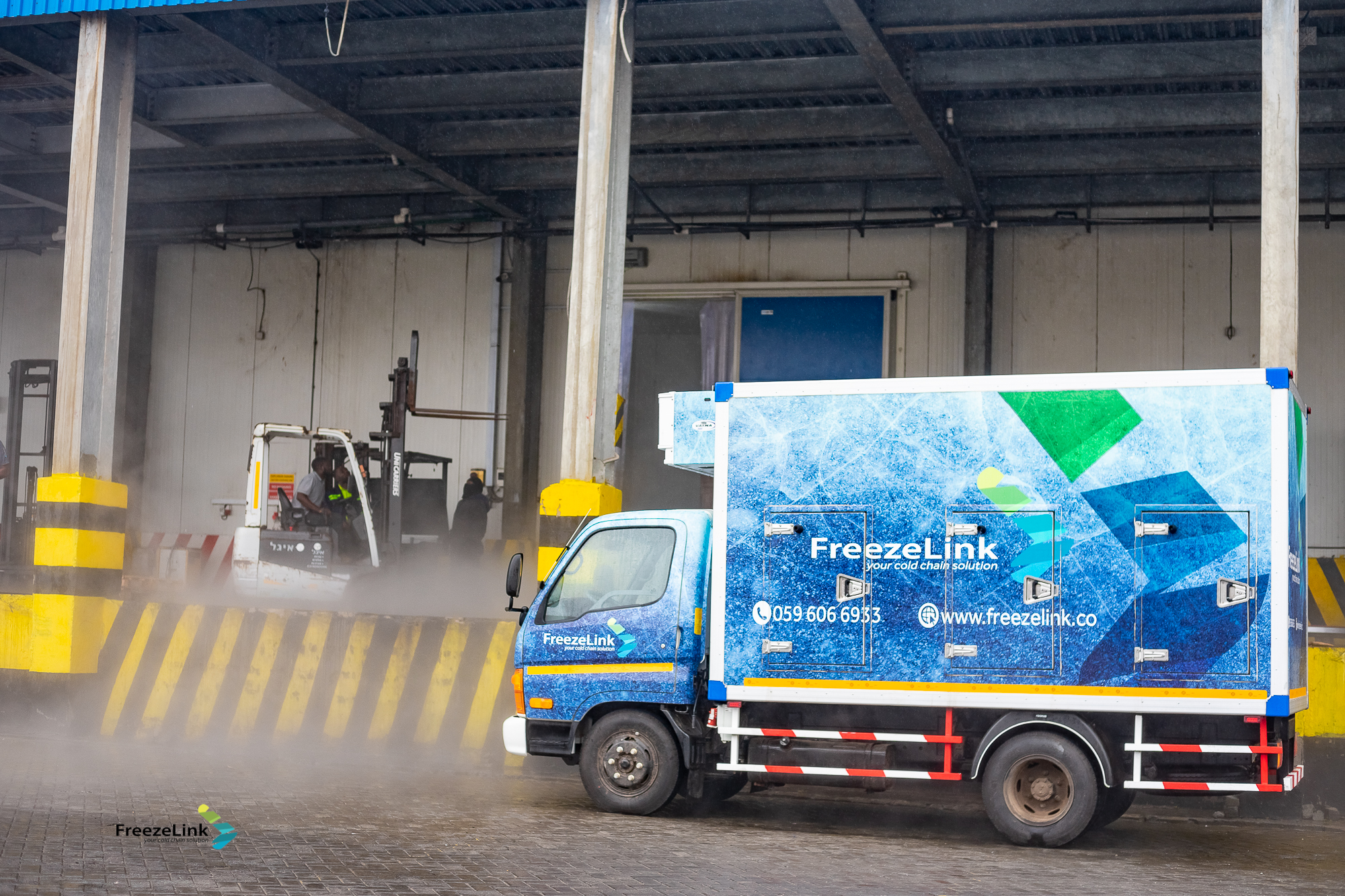
For Ghana, which has set an ambitious goal to increase non-traditional exports from $3 billion to $10 billion by 2030, fixing this leak is an economic necessity. A robust cold chain could enable Ghana to expand its export of premium Grade A produce by up to 60%5. Given that Grade A exports can command double the revenue of their Grade B counterparts, the economic upside is transformative. The Food and Agriculture Organization (FAO) projects that efficient cold chain systems could increase Ghanaian farmers’ earnings by about 40%7.
The lynchpin of this transformation is the “first mile” of the cold chain—the immediate post-harvest stage. Solar-powered pre-cooling and cold storage units at the farm gate or aggregation points are indispensable. This technology removes field heat, extends shelf life, and preserves the quality needed to compete in lucrative international markets. At present, only 5% of Ghana’s agricultural sector has access to adequate cold chain facilities, a deficit that severely hampers local production and increases dependence on imports8.
The path to achieving both food security and the $10 billion export target is clear. It begins not with planting more seeds, but with plugging the holes in the national harvest basket. By prioritising investment in smart, sustainable, first-mile cold chain logistics, Ghana can ensure the fruits of its labour nourish its people and command their true value on the world stage. It is time to stop pouring resources into a leaky system and, instead, finally fix the hole.
References
Agribusiness in Sustainable Natural African Plant Products (ASNAPP). (2020). Feasibility Study for Cold Chain Opportunities in Ghana. Report prepared for The Trade Council of Denmark.
Food and Agriculture Organization of the United Nations (FAO). (2019). The State of Food and Agriculture 2019. Moving forward on food loss and waste11 reduction. Rome.
International Finance Corporation. (2018, 2019). Reports and data on Ghanaian agricultural sector as cited in FreezeLink PR Factsheet.
Goedde, L., Ooko-Ombaka, A., & Pais, G. (2019). Winning in Africa’s agricultural market. McKinsey & Company.
Boston Consulting Group. (2021). Tackling the 1.6-Billion-Ton Food Loss and Waste Crisis.
United Nations Environment Programme (UNEP). (2021). Food Waste Index Report 2021.
What do you believe is the biggest obstacle to fixing Ghana’s post-harvest losses and what role should cold chain play in solving it?
Drop a comment below or send us a message.
.
GET IN TOUCH