
FREEZELINK BLOG
AGRIC & PHARMACEUTICAL COLD CHAIN INSTITUTE
The Importer’s Cold Truth: 5 Laws of Survival for Perishable Cargo in Ghana
Introduction: Physics Doesn’t Negotiate
If you leave a South African Packham Pear in 30°C heat, the skin begins to brown irreversibly within four hours. The biology of the fruit does not care that the clearing agent is stuck in traffic on the Spintex Road, Accra, Ghana.
If the humidity in a warehouse near Kotoka International Airport (KIA) spikes above 60%—even if the temperature is a perfect 5°C—a drum of Clavulanate Potassium (a critical Active Pharmaceutical Ingredient) can turn from a life-saving antibiotic precursor into a useless drum of brick-dust. The chemistry of the API does not care about your logistical intent.
Importing perishables into Ghana—whether by sea through Tema or Takoradi Port, or air through Kotoka International Airport (KIA) —is not just a logistical challenge; it is a biological race against time, heat, and humidity.
This guide is for the architects of perishable complementarity: those bringing in the nutrition Ghana cannot grow (Apples, Pears, Stone Fruit) and the industrial inputs we need to manufacture (enzymes, cultures etc.).
Here are the 5 Laws of Survival for the modern importer.
Law 1: The “Double Bill” of Delay (Why Reefer Demurrage is Twice as
Deadly)
The enemy of profit in Ghana is not just the import duty; it is the friction that leads to Demurrage. But for cold chain importers, demurrage is twice as painful.
When a dry container sits at Tema Port for 17 days, you pay rent. When a reefer sits for 17 days, you pay rent plus electricity. Terminal operators bill separately for “plug-in” charges.
But the third, invisible bill is the highest: Shelf-Life Erosion. Every day a container of apples sits at the port is a day removed from its sellable life. We have seen instances where delays resulted in 100% of the stock being written off because it was too close to expiration for processors to accept.
The Global Perspective:
The Global Cold Chain Alliance (GCCA)—the world’s primary authority on temperature-controlled logistics—consistently highlights that fragmentation causes this waste. As the first African company in history to have a representative on the Board of Directors for the GCCA’s foundation (the Global Cold Chain Foundation), FreezeLink has seen how these delays stifle growth markets. When Clearing, Transport, and Storage are handled by a single architectural mind, the friction vanishes.
Law 2: Regulatory Pre-emption (Winning the War Before Arrival)
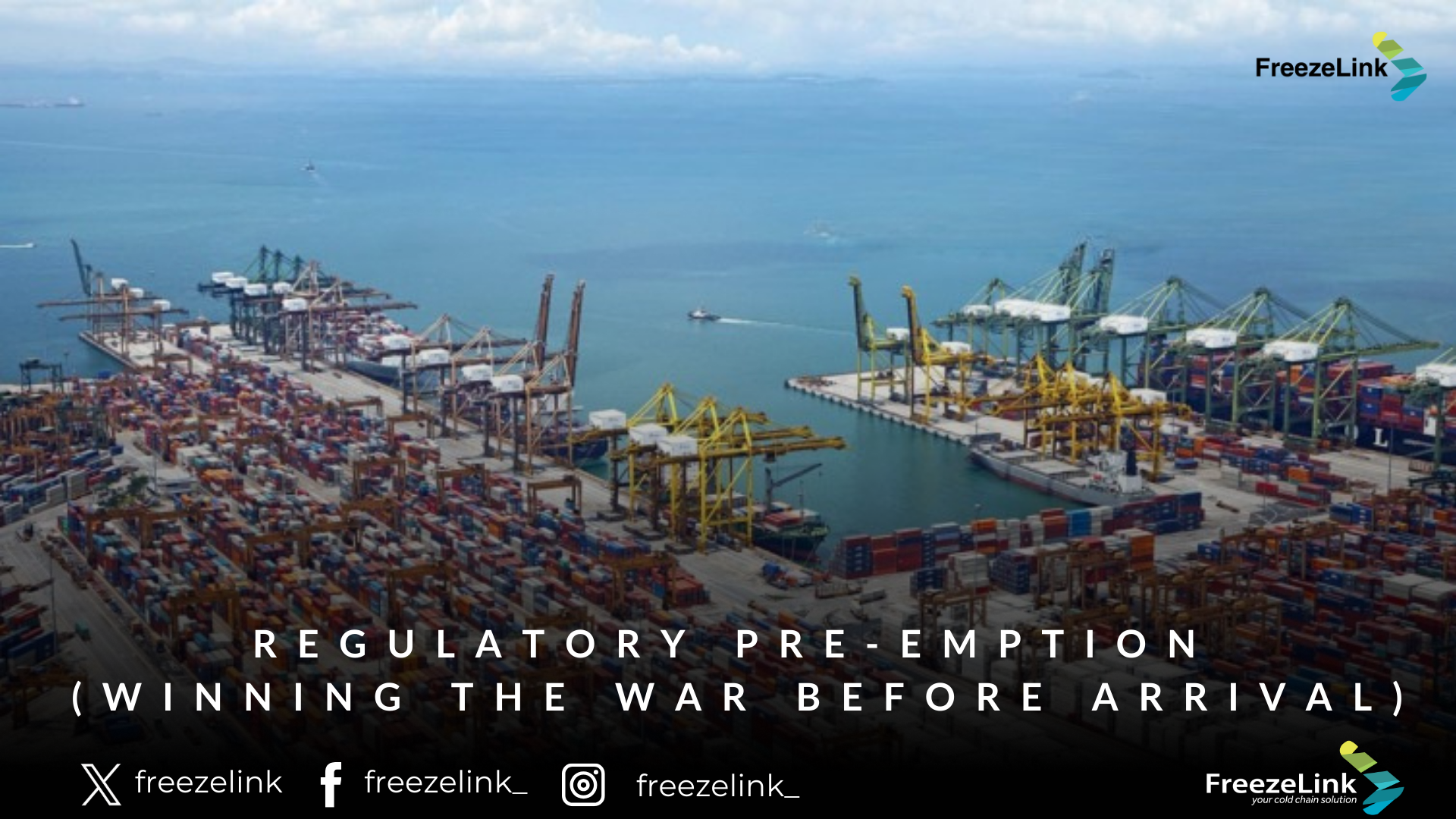
The great mistake made in Ghanaian logistics is the belief that some, or all, of the “Clearing” begins when the vessel berths at Tema or the flight lands at KIA.
In the traditional, fragmented sector, the agent often waits for the arrival notification before initiating the key paperwork. For perishables, this is a fatal error.
The Reality: The Ghana Food and Drugs Authority (FDA) requires rigorous product registration. If an importer attempts to navigate the Public Health Act after the container has landed, the goods become effectively hostages to bureaucracy.
The Fix: Operational success requires Regulatory Pre-emption. The most successful supply chains register products and secure permits while the fruit is still on the tree in the Western Cape or the enzymes are still in the factory in Europe. You do not just clear the goods; you clear the path. If you do not have your permit before the hatch opens, your cargo is already decaying.
Law 3: Connecting Ghana and The World via Financial Bridges
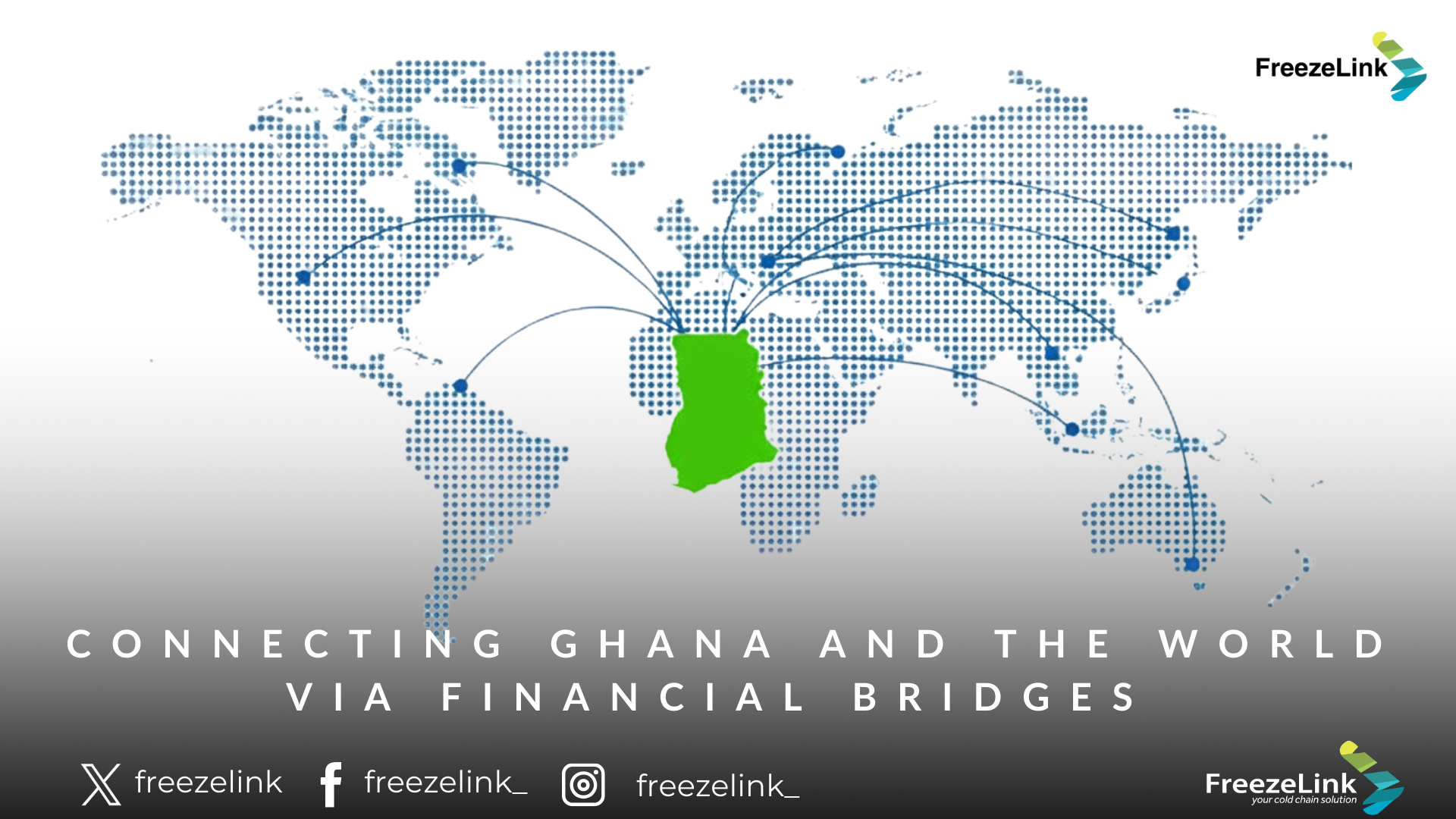
West Africa represents a market of over 400 million people, with Ghana serving as a stable, golden gateway. Yet, a massive trust gap separates them: Exporters fear non-payment; Importers lack the liquidity to prepay.
How do we cross this chasm?
The solution is the Synthetic Bond (Collateral Management Agreement). In this model, the logistics provider acts as a neutral “Vault.” They take legal custody of the goods in Ghana, while the exporter retains ownership. The stock is released to the buyer only as they pay.
This is the “So What”: This mechanism is the singular key to unlocking West African trade. It allows global supply chains to connect inventory into Ghana specifically and Africa, generally, without risk.
Also, Customs Bonding allows importers to move cargo from the port to a bonded warehouse without paying duty immediately. You pay the duty only when you sell the goods. It converts a logistics facility into a tax-deferred financial instrument, freeing up your working capital.
Furthermore, for international brands daunted by the Ghana Investment Promotion Centre (GIPC) equity rules, Importer of Record (IoR) services act as a regulatory bridge, allowing them to trade legally and instantly.
Law 4: The Fragmented Cold Chain (A Silent Killer)
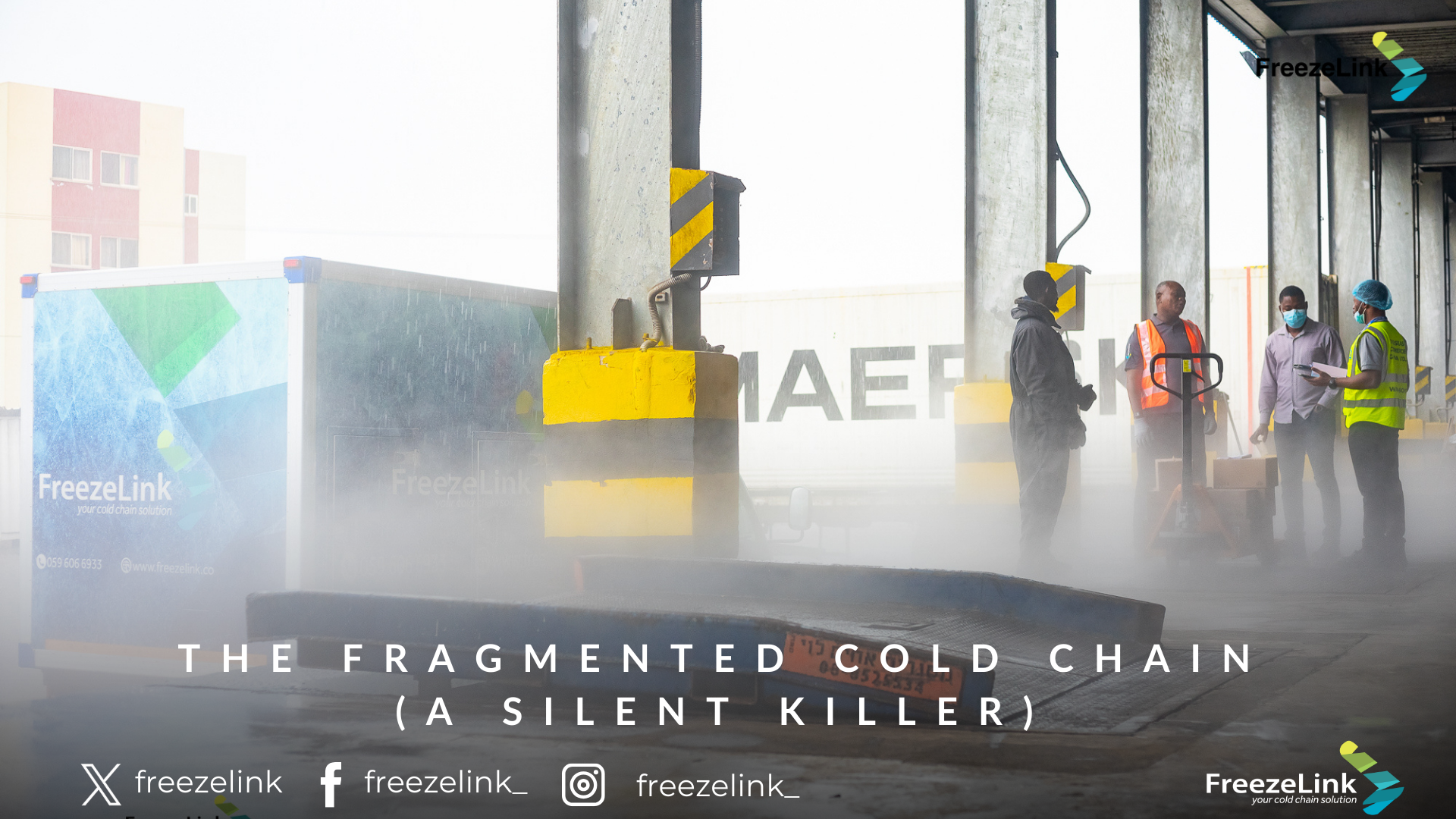
The norm in Ghanaian freight forwarding is “Subcontracting Obscurity.”
Most forwarders do not own assets. They are phone-operators who hire a clearing agent, who hires a transporter, who hires a warehouse. This fragmentation creates three distinct risks:
- Health Risk: Without deep expertise in temperature sensitivity, generalist forwarders cut corners. A common error is transporting reefers without “Clip-on Gensets” (generators).They gamble that the cargo will stay cold during the drive. It doesn’t. The temperature rises, bacteria blooms, and shelf-life is quietly destroyed before the goods reach the shelf.
- Contamination Risk: When a transporter does not own their fleet, they prioritize the next job over hygiene. We have seen instances where a truck carried frozen fish on Monday, and then—without proper sanitization—attempted to carry fresh produce or sensitive pharma on Tuesday. The result is cross-contamination that renders high-value cargo unfit for human consumption.
- Commercial Risk: This is the “Margin Cascade.” The forwarder, the agent, the trucker, and the warehouse each add a margin. You are paying four distinct profit centers for a service that is slow, reactive, and unaccountable.
The “Silent Killer” isn’t just the heat; it’s the hand-offs.
Law 5: The Visibility Guarantee (Escaping the “Data Black Hole”)
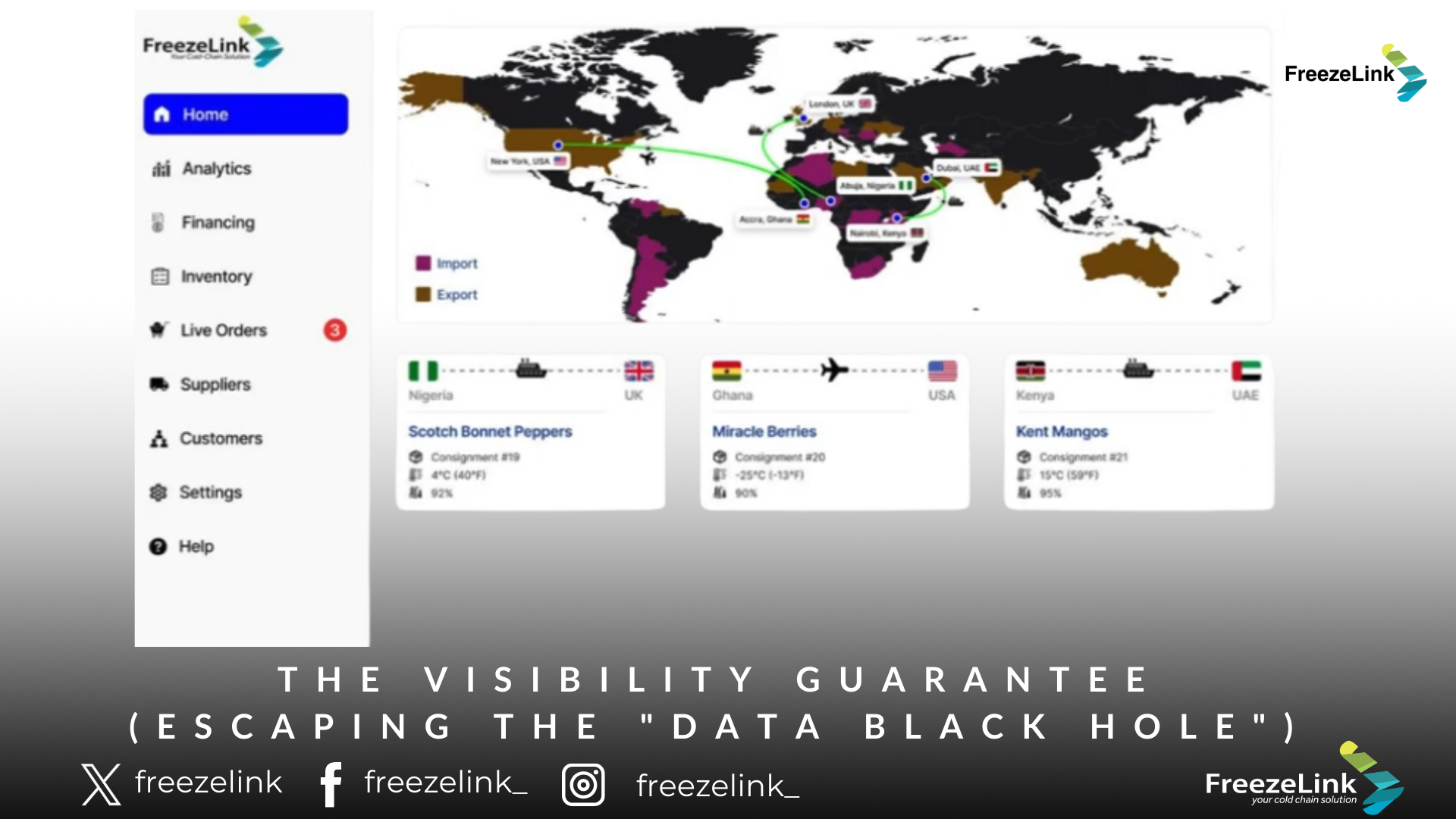
In a busy port environment, analogue communication—”The truck is leaving now”—is unreliable. High-value perishables often fall into a “data black hole” the moment they touch the tarmac at KIA or the ground at Tema.
Hope is not a strategy. The only insurance is Total Visibility.
Using IoT (Internet of Things) trackers effectively “lights up” the dark spots of the supply chain.
Real-time monitoring of location, temperature, and door-opening status transforms a chaotic journey into a managed process. You should not have to guess where your products are; you should be able to see them.
Closing Thought: The Cost of Connectivity
When these 5 Laws are respected, the result is more than just a saved crate of pears.
It is about Connectivity.
Ghana is poised to be an industrial powerhouse. But local factories need inputs, and consumer need nutritional diversity. When we allow friction, analogue processes, and bad handovers to break the cold chain, we disconnect Ghana from the global grid.
The clock is already ticking. Whether your goods are in the air or on the water, biology doesn’t pause for paperwork.
Would you benefit from a free consultation to turn your supply chain from a gamble into a guarantee? Contact FreezeLink Global Forwarding now at 059 606 6933 or send as an email at hello@freezelink.co
👉 learn more at www.freezelink.co
GET IN TOUCH