

FREEZELINK BLOG
AGRIC & PHARMACEUTICAL COLD CHAIN INSTITUTE
The Tomato Time Bomb: Why Eating in Accra Costs 300% More Out of Season
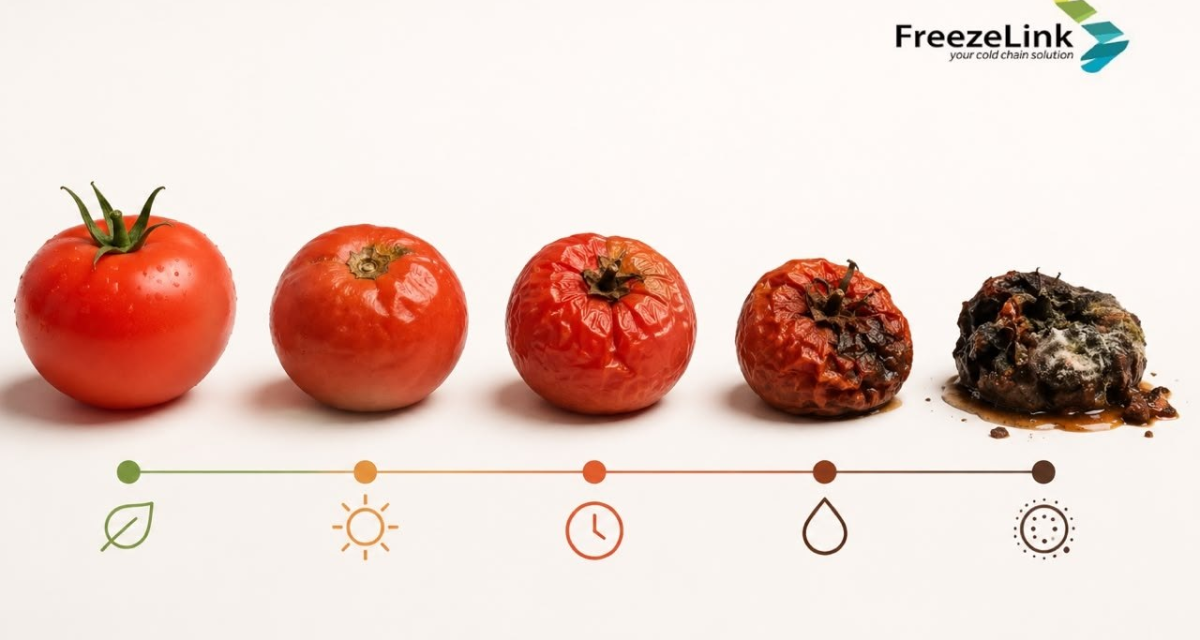
Ghana’s newly emerging 24-hour markets represent a historic opportunity to expand trade and create new channels for agricultural commerce. Their success will, however, depend on whether the systems supporting farmers, traders, and fresh produce can preserve value from harvest to customer plate. With every passing hour, unprotected produce loses quality, turning national agricultural wealth into waste and driving up costs before a single tomato reaches the dinner table. As round-the-clock trading zones take shape across Ghana, a critical infrastructure gap threatens to leave farmers with the same seasonal losses that have long weakened the agricultural sector. The crisis is already unfolding.
The Midnight Ghost of 1998
To understand why our dinner tables are under siege in 2026, we have to look backward. Nearly thirty years ago, a landmark report titled FOOD SUPPLY AND DISTRIBUTION TO ACCRA AND ITS METROPOLIS, published in 1998, exposed a brutal reality. Commissioned as a joint initiative by the Accra Metropolitan Assembly (AMA) and the UN’s Food and Agriculture Organization (FAO), the document revealed that staple food prices in Accra regularly skyrocket by 200% to 400% simply because our market infrastructure cannot cope with seasonal changes.
The calendar says 2026, yet our markets remain locked in the same harvest cycle. Year after year, the preventable failure runs its course. Farmers rush to sell before their harvest spoils, flooding the market and driving prices to rock bottom. Weeks later, with no infrastructure to preserve the surplus, that abundance disappears and scarcity takes its place. The result is a predictable market penalty: prices climb sharply, consumers pay more, and the value created during harvest season is lost before it reaches the table.
We are building a 24-hour economy on top of a broken foundation. Consider this alarming statistic: up to 60% of Ghana’s fruit and vegetable harvest perishes before ever reaching a plate, yet a mere 5% of our entire agricultural sector has access to any form of adequate refrigeration. Every extra hour food spends in markets without temperature-controlled storage is another hour bacteria have to multiply.
The Fatal Flaw of Siloed Thinking
We often treat local distribution and agricultural exports as isolated silos, separating the domestic trader supplying a local stall from the commercial firm shipping premium chili peppers abroad.
In reality, these two worlds are organically bound. When an export venture launches, only a fraction of the harvest meets the hyper-strict “Grade A” requirements for international shipping. To survive commercially, especially during the critical startup phase, the exporter must instantly monetize the remaining non-exported crop within the domestic market.
If our local 24-hour markets lack commercially-sustainable cold storage, that secondary harvest rots instantly under the tropical sun. When this local safety valve fails, the entire export business collapses, creating a ripple effect of domestic scarcity that causes everyday food prices to double or triple out of season. Local survival and global trade are two sides of the exact same coin.
The Friction of Today vs. The Flow of Tomorrow
To build a narrative of real change, we must look closely at the gap between our current situation and what is truly possible when smart infrastructure meets precision execution.
The Unrefrigerated Night Stall vs. The Smart Cold Hub: Operating markets 24/7 in ambient humidity accelerates spoilage. Transformation requires integrated, temperature-controlled networks. For instance, FreezeLink’s project at Cotonou International Airport utilized IoT tracking to turn a chaotic supply chain into a managed, high-visibility process.
The Electricity Trap vs. Smart Design: Many municipal cold rooms fail because they are built incorrectly, essentially acting as regular rooms with standard cooling units slapped on, which leaks cold air and drives electricity bills through the roof. When built without specialized design, a cold hub quickly becomes a financial drain. By using specialized engineering from day one, such as the advanced insulation and specialized energy-efficient refrigerants, local markets can drastically reduce their daily power consumption, keeping operating costs low and the business permanently profitable.
The Commercial Cliff vs. The Domestic Revenue Shield: Startup farms lose profitability when sub-grade produce decays. Data from FreezeLink’s solar powered cold storage projects (see here for example) show that while Grade A exports earn premium revenue, protecting the domestic surplus can be what keeps the entire operation afloat.
A Shared Blueprint for National Resilience
To turn this massive opportunity into a lasting reality, Metropolitan, Municipal, and District Assemblies (MMDAs) and the 24-Hour Economy Authority must approach food preservation as a precision discipline. A market cold room is an engineered system where insulation, airflow, cooling capacity, and energy efficiency must work together to protect value from harvest to market.
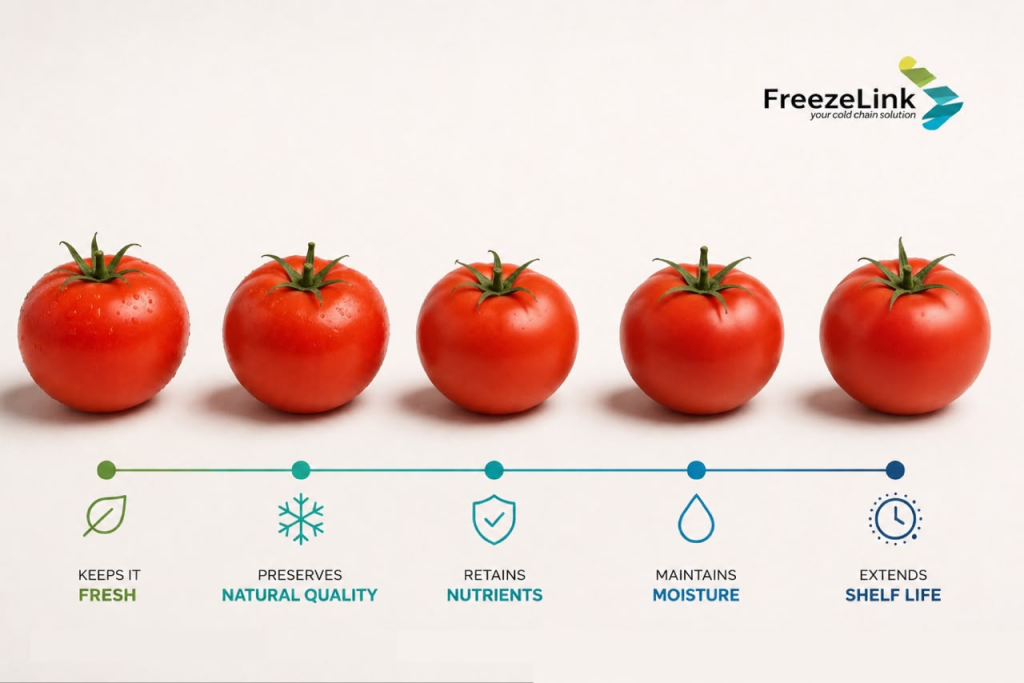
Whether deploying modular cold storage hubs across local district markets or building full-scale international export hubs, our engineering focuses heavily on minimizing operational costs and maximizing shelf-life. Let’s design these new 24-hour markets with the strategic foresight they deserve, ensuring they become engines of resilience, efficiency, and national food security.
Want to learn more? Check out our website, and contact us now for a free consultation here.